




If you love having people over, a finished basement can turn your home into a true destination for game nights, watch parties, and long, relaxed evenings at the bar. The catch is that basements don’t start as a blank canvas. They come loaded with mechanicals, vents, and odd structural quirks that can either limit you or become part of a smarter design. The real opportunity is creating a space that looks warm and welcoming while quietly tucking away utilities and appliances so they’re out of sight but still easy to reach when you need them. Take it from a family in St. Louis that recently had us remodel their basement for a bar and entertainment zone. Let’s look at how thoughtful lighting, well‑placed doors, smart storage, and cleverly concealed-yet-accessible features can set your basement bar up for both everyday comfort and effortless entertaining.
Make Your Basement Destination-Worthy
When you picture your favorite nights at home, they’re usually defined by the people and the energy in the room. Memories are created by friends drifting between conversations, kids sneaking back for one more game, someone leaning over to change the playlist as the evening stretches on.
A finished basement can become the backdrop for all of that. A newly renovated basement gives you room to spread out so gatherings feel relaxed instead of crowded or chaotic.
As you shape the space around the way you actually like to host, you start by thinking about what you need. Determine clear spots for hanging out, playing, and watching. Once those are in place, it becomes obvious that you also need one central spot for drinks, snacks, and easy refills.
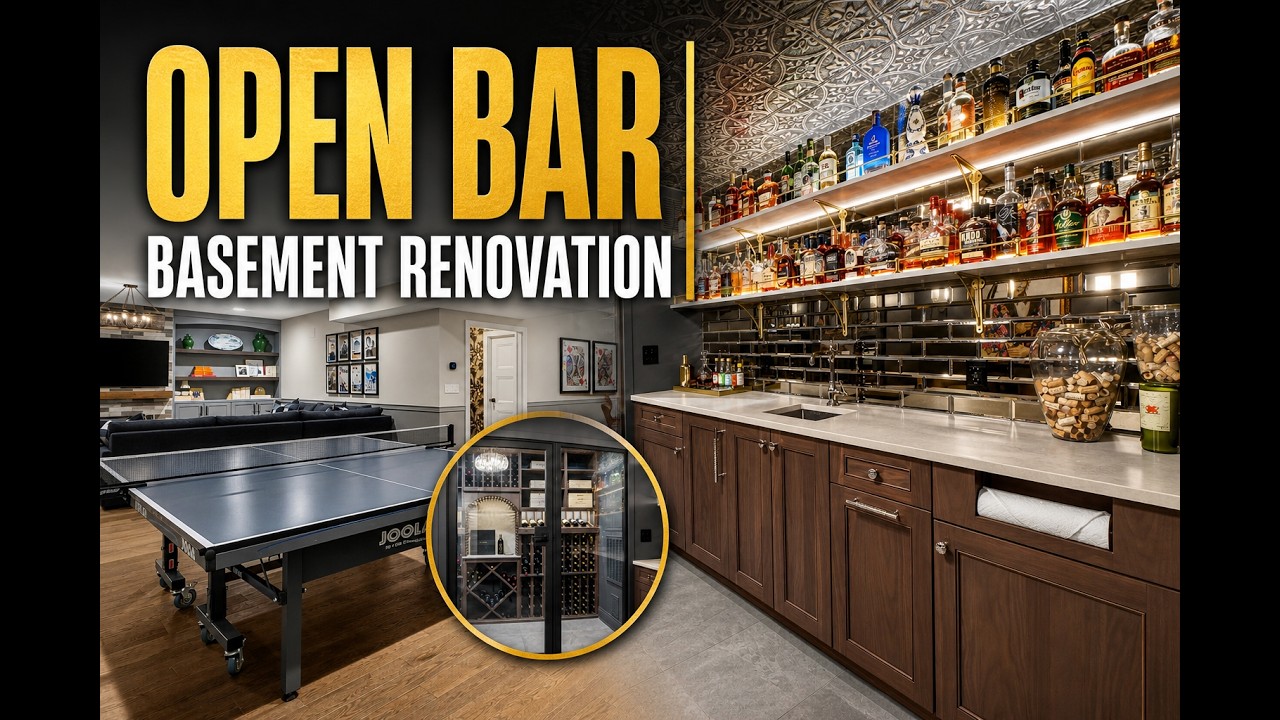
In the case of the family we renovated for, that moment turned into a bold decision. They made their bar the star of the show, designing it as the visual and social anchor that everything else revolves around, while the rest of the room still keeps the focus on the people and the moments they’re sharing.
Lighting Up A Good Time
Basements rarely come with great natural light. Therefore, the right lighting plan can do a lot of heavy lifting.
Instead of relying on one overhead fixture to brighten the whole room, it helps to build in layers that make the space feel both functional and inviting:
- Ambient lighting, like recessed ceiling lights, gives the entire room an even, comfortable level of brightness.
- Task lighting adds focused illumination where you actually need it, especially over the sink, along the countertop, or under shelves.
- Accent lighting brings in personality through details like backlit bottle displays, wine storage lighting, or wall sconces.
Together, those layers shape both the mood of the room and the way each area works. A chandelier over the card table, for example, instantly tells everyone it’s a spot for games and gathering, while recessed lights keep the nearby lounge and walkways bright enough to move through comfortably.
Near the serving area, under‑shelf lighting and other smaller fixtures add the focused light you need for mixing and cleanup without stripping away the warmth you’ve created elsewhere. With all of those pieces working together, the basement starts to feel less like a lower level and more like a fully realized place to relax, host, and stay awhile.
Open the Door to a Show-Stealing Door
One of the easiest ways to make a basement entertaining space feel more intentional is to give it a real sense of arrival. Instead of letting the bar or wine area blend into an open corner, doors and transitions help define these areas as their own destinations within the larger basement.
That’s exactly why glass‑paneled doors work so well in a hosting environment. They create separation without making the space feel closed off, which is especially important in a basement. This style lets light travel through, something that’s often in short supply downstairs, all while still giving you a clear visual connection into the room.
In this recent basement remodel in St. Louis, the double wood doors do more than divide one area from another. They frame the wine and bar space like a feature, making the zone feel elevated before you even step inside.
That kind of entry also adds practical value:
- Glass panels help maintain visibility and openness.
- Doors create a stronger transition between entertainment zones.
- A defined entry makes the space feel more custom and finished.
There’s also a functional upside to being able to close the space off when needed. Doors can help soften sound, contain activity, and create a little separation from the rest of the basement when one area is in use and another is meant for relaxing.
If the space includes wine storage, a sink, or other serving features, that extra layer can also help manage smells and keep the overall basement feeling cleaner and more controlled.
Putting Displays on Display
Great basement entertaining spaces know how to strike the right balance between what gets showcased and what gets tucked away. Bottles, glassware, wine collections, and meaningful pieces of décor can all add character, but without enough hidden storage, the space can quickly start to feel cluttered instead of curated.
That’s where a mix of open display and closed storage really earns its keep. Open shelving gives you a place to highlight the pieces that add personality to the room.
Let drawers and cabinets handle the everyday essentials. Keep bar tools, mixers, napkins, extra glassware, and cleanup supplies out of sight but within reach.
A well-planned setup often includes a combination of:
- Open shelving for bottles, glassware, décor, and statement pieces.
- Drawers and cabinets for the practical items you use all the time but don’t necessarily want on display.
- Built-in wine storage and recessed niches that turn collection storage into a design feature.
A remodel is also a great opportunity to carve out room for collectibles and sports memorabilia, especially in a basement that’s designed for entertaining. Framed pieces, signed items, team accents, or other personal collections can help the room feel less like a generic bar and more like an extension of the family’s interests and style. When those elements are given a dedicated place on shelving, in built-ins, or as part of a gallery wall, they read as intentional rather than incidental.
For the St. Louis family, the back bar shelving creates a layered look by putting bottles and decorative elements front and center, while the lower cabinetry handles the less glamorous storage needs behind the scenes.
The wine room takes a similar approach on a larger scale, using built-in racking and a central niche to turn storage itself into a focal point. Together, those choices make the room feel collected, polished, and personal without sacrificing the practical storage that keeps entertaining easy.
Hide Away Essentials While Making Them Accessible
Every basement has a few hardworking features that aren’t exactly design‑forward. These are things you can’t avoid in a functional home, such as HVAC returns, access panels, water tanks, utility connections, and small appliances.
The goal is not to make those elements disappear completely. Instead, you want to integrate them in a way that feels intentional while keeping the room looking polished.
That’s where thoughtful millwork, paneling, and trim can do a lot of work. Matching wall panels, built‑in surrounds, and vented doors help mechanicals blend into the design instead of interrupting it, as you can see in the concealed utility wall near the wine storage in this space.
Just as important, though, is making sure hidden never means sealed off. Shutoff valves should still be reachable, electrical panels should stay unobstructed, and anything tucked behind panels still needs enough airflow to work safely and properly.
Tying the Space Together
In a basement that needs to do a lot, finishes are what make everything feel connected. They help the space feel cohesive instead of pieced together. When different areas serve different functions, the right materials create a common thread.
Wood tones, metal accents, tile, paint, and countertops all play a role. Together, they can unify the bar, lounge, storage, and circulation zones. That consistency helps the basement feel more finished and intentional.
The close-up of the bar in the St. Louis basement remodel shows how effective that mix can be. Rich wood cabinetry adds warmth. Metal shelving details bring in polish. The glossy backsplash reflects light, which helps brighten the space and add depth. Altogether, those choices create a more elevated, clubby feel while reinforcing the bar as a focal point.
Basement Renovation in St. Louis
If you’re looking at your own lower level and seeing more “unfinished space” than “go‑to hangout,” our team at Mosby Building Arts can help you change that. We transformed this St. Louis basement from a basic footprint into a layered entertaining hub, complete with a showpiece bar, dedicated game and lounge zones, and thoughtful solutions for all the behind‑the‑scenes mechanicals. We can apply the same level of care to your home!
From early planning and layout to finishes, lighting, and custom details that fit the way you actually live, our specialists handle the full renovation process so you end up with a space that feels welcoming, practical, and ready for your next gathering.